
Edible Oil Filling Machines Selection Guide
Compare edible-oil filler proposals with the same oil temperatures, volume or mass checks, nozzle cut-off, bottle handling, cleaning and accepted output.
Give each supplier the same oils, operating-temperature range, bottle formats, fill targets and finished-pack checks. Compare quantity results, clean necks through closing, stability and accepted completed-bottle output under the same startup, replenishment and restart conditions. Keep untested oils, temperatures and formats visible in the comparison.
Use the complete filling sequence and common acceptance-test record. An acceptable dose alone does not establish clean closing, successful changeover or the output of the complete line.
Compare options in the conditions where they must work — Edible Oil Filling Machines
Compare the actual duty from oil supply to a correctly filled and closed bottle. Include normal product and packaging variation, product-contact and cleaning requirements, and the agreed method for measuring quantity. Ask each proposal to identify its tested range and outstanding trial conditions.
Discuss your application
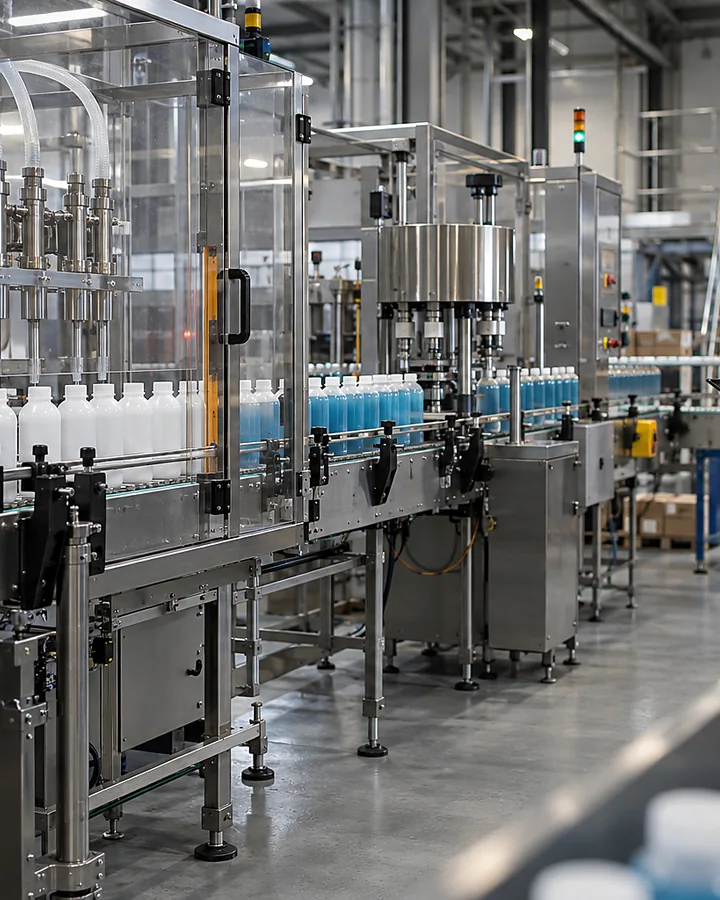
Ask every supplier the same questions
| Decision to resolve | Evidence to compare |
|---|---|
| Which oils and operating temperatures are included? | Identified oil samples and the operating-temperature range, including upstream storage or transfer conditions. Record trial conditions and oils or temperatures not yet represented. |
| Is the quantity controlled by volume or mass? | Target quantities, individual results and the finished-bottle checking method. Define tare for mass checks and actual oil density and temperature when a weight result checks a volume dose. |
| How will the nozzle avoid contaminating the pack? | Nozzle entry, cut-off and withdrawal observations at the narrowest neck and most restrictive shoulder. Inspect necks, threads and shoulders after movement into closing, including first fills after a pause. |
| Can containers stay stable through the complete cycle? | Lightest empty and largest filled bottles, closures and supplier variation through positioning, filling, transfer and closing. Retain stability and guide/format-setting observations. |
| What changes between oil and bottle formats? | Product-contact path, retained oil, draining and the approved cleaning method; format parts and settings. Record product and packaging changes and the time and material until accepted restart. |
| What determines accepted production output? | Correctly filled and closed bottles over an agreed period for each pack size. Include rejects, normal replenishment and interruptions, with the product conditions and operator tasks stated. |
Include simpler approaches to edible-oil filling and bottling in your shortlist
| Route to assess | When it belongs in the comparison | Deciding check |
|---|---|---|
| Volumetric edible-oil filling | A candidate piston or pump arrangement can be assessed against the product and volume range. | Trial quantity variation, cut-off and the real bottle neck. |
| Weight-based edible-oil filling | The process requires direct mass control or quantity variation warrants an alternative assessment. | Agree container tare, measurement conditions and the complete handling cycle. |
Pause before choosing when…
- Only perfect or hand-selected examples of routine production using edible-oil filling and bottling are available.
- No one has defined how finished-pack checks and reject handling will be evaluated.
- The normal range for oil properties and filling temperature is described only as “usually fine” but has not been bounded.
- Your operator, cleaning, maintenance or recovery access has not been considered.
- Quoted performance depends on another machine or data source that is not included.